Introduction
Learning the Quran isn’t just about reading the words — it’s about reciting them as they were revealed.
For Muslims in the U.S. and other non-Arabic-speaking countries, mastering Tajweed online has become one of the most practical and spiritual ways to connect deeply with the Qur’an.
But before you start, you might wonder:
- Can I really learn Tajweed online?
- Is Tajweed necessary for every Muslim?
- How long does it take to master Tajweed rules?
In this guide, we’ll answer all these questions and show you how to learn Quran online with Tajweed step-by-step — effectively, correctly, and beautifully.
📎 Related: How to Choose the Right Online Quran Teacher
What Is Tajweed and Why It Matters in Online Quran Learning
Tajweed (تجويد) literally means to make better or to beautify.
It’s the science that governs how every letter of the Quran is pronounced — from where it comes out (Makharij) to how it sounds (Sifat).
A lot of learners ask:
- What happens if I read the Quran without Tajweed?
- Is it a sin to recite without proper pronunciation?
- Why do Arabs and non-Arabs sound different when reading Quran?
💬 Answer:
Reading without Tajweed doesn’t invalidate your recitation, but it can alter meanings — which is why Prophet Muhammad ﷺ emphasized “reciting the Qur’an as it was revealed.”
Tajweed ensures accuracy, respect, and beauty in every verse.
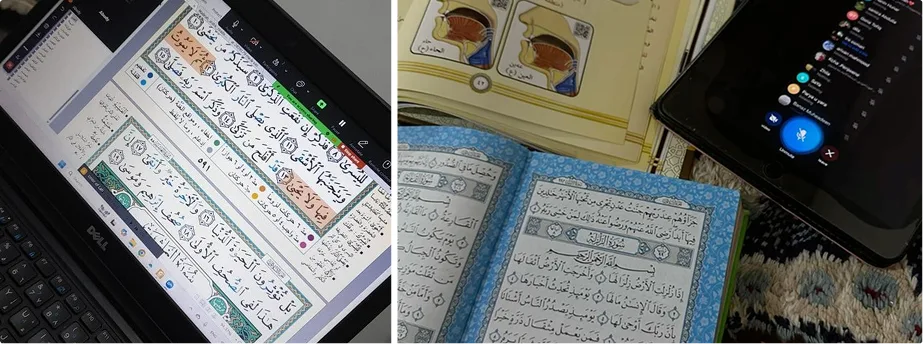
In online classes, teachers use visual mouth diagrams, slow repetition, and audio playback tools to help students master sounds they can’t hear clearly in everyday life.
This is especially effective for English-speaking learners who struggle with letters like “ع” (‘Ayn) or “ق” (Qaf).
📎 Explore next: Common Mistakes in Quran Reading
Can You Really Learn Tajweed Online as a Beginner?
Absolutely — with the right structure and a qualified teacher.
The biggest misconception is that Tajweed can only be learned face-to-face. In reality, online platforms today provide live correction, interactive visuals, and screen-shared exercises that replicate the classroom experience perfectly.
Students often ask:
- Is online Tajweed hard for beginners?
- Can I learn Tajweed without knowing Arabic?
- Do I need to memorize Quran before learning Tajweed?
✅ Answers:
- No Arabic required. Many successful learners in the U.S. start from zero; teachers explain every rule in English first.
- Tajweed before memorization: It’s always recommended to master pronunciation before memorizing, so your mistakes don’t become permanent.
- Beginner-friendly structure: Courses start with the Noor Al Bayan or Qaida Noorania method, which helps you pronounce Arabic letters correctly before moving to verses.
💡 Pro tip: Always combine your Tajweed practice with slow recitation and teacher feedback.
That’s what makes Online Quran Classes more effective than self-study videos.
Main Tajweed Rules Explained for Online Learners
When you learn Quran online with Tajweed, it’s easy to feel overwhelmed by all the rules — Ikhfa, Idgham, Qalqalah, Ghunna…
But in reality, Tajweed follows a clear logic: each rule exists to preserve the sound, flow, and beauty of Allah’s words.
🧩 The 5 Core Tajweed Foundations You’ll Study Online
- Makharij al-Huruf (Articulation Points)
Where each letter exits from your mouth or throat.
👉 Common search question:
“How can I learn the Arabic letters correctly if I’m not a native speaker?”
💬 Answer: Online teachers use visual charts and mouth diagrams to demonstrate how sounds like ‘Ayn (ع) and Ha (ح) come from deep in the throat, not from the tongue.
- Sifat al-Huruf (Letter Characteristics)
These define how a sound should feel — soft, heavy, echoing, etc.
“Why do some Quran letters sound heavy?”
Because letters like خ، ص، ض، ط، ظ have a built-in heaviness (tafkhim), which changes how your mouth shapes around them.
- Rules of Noon and Meem (Ghunnah, Ikhfa, Idgham)
The nasal sound “nn” or “mm” that gives Quran its rhythm.
“Why do we hum when saying some words in Quran?”
That’s the ghunnah — a 2-count nasal sound, one of the easiest Tajweed concepts to master online.
- Madd (Elongation)
Stretching certain vowels for 2–6 counts.
“How do I know when to stretch a letter in Quran?”
Your teacher will guide you using visual time counts and recitation examples, making Madd rules fun to learn.
- Qalqalah (Echoing Sound)
A slight bounce on letters like ق، ط، ب، ج، د when they appear silent.
“What is Qalqalah in Tajweed?”
It’s what gives words like “Yaqtul” their clear and crisp bounce, preventing flat pronunciation.
💡 Pro tip:
In online Tajweed classes, teachers combine live repetition, AI-based pronunciation detection, and audio comparison tools so learners can see their errors instantly.
📎 Related: How to Choose the Right Online Quran Teacher
Common Challenges When Learning Tajweed Online (and How to Overcome Them)

Even with qualified teachers, many students struggle with Tajweed online for one simple reason — they underestimate how technical pronunciation can be.
Let’s address the real pain points people face, and how to solve them.
⚙️ 1. “I can’t pronounce certain Arabic letters.”
Can I learn Tajweed if I don’t know Arabic?
Yes. You don’t need to speak Arabic to master Tajweed. Teachers break down each sound phonetically using English examples (e.g., “ع” sounds like a deep ‘ah’ from your throat).
🎧 Solution: Record yourself during class, then compare it with your teacher’s recitation — most platforms now offer this feature.
🕒 2. “I forget the Tajweed rules after a few days.”
How do I memorize Tajweed rules easily?
Don’t memorize rules mechanically. Practice them inside verses.
Example: your teacher might repeat Surah Al-Fatihah focusing only on Madd rules that day. Real usage makes rules stick for life.
📎 Try reading: Common Mistakes in Quran Reading
🎯 3. “I’m not sure if I’m improving.”
How do I track my Tajweed progress online?
Set micro-goals: mastering 5 letters a week, recording one Surah monthly, and getting a progress report from your tutor.
Platforms like Hoor Academy send monthly performance reviews and highlight which Tajweed rules you still misapply.
💬 4. “I’m scared to recite in front of a teacher.”
Is it normal to feel nervous in Tajweed classes?
Totally. Tajweed requires correction, not perfection. Online 1:1 sessions remove judgment and help you build confidence privately.
🧠 5. “There are too many Tajweed books — where should I start?”
Which Tajweed book or method is best for beginners?
Start with Noor Al Bayan or Qaida Noorania, both widely used in online classes. They’re visual, simple, and effective for non-Arabic speakers.
💡 Final Tip:
The key to mastering Tajweed isn’t perfection; it’s repetition with feedback.
That’s what makes Online Quran Classes at Hoor Academy uniquely effective — every session focuses on real progress, not just theory.
How to Find the Best Tajweed Teacher Online
Finding the right teacher is the turning point in your Tajweed journey.
Even if you’ve watched hundreds of videos, nothing replaces a live, patient instructor who listens and corrects your recitation.
🧭 What to Look For in an Online Tajweed Teacher
- Certified in Tajweed and Ijazah — Ask where they studied and whether they hold a teaching license.
How do I know if my online Quran teacher is certified in Tajweed?
Look for verification from trusted institutions like Al-Azhar University or other Islamic centers recognized for Quranic education.
- Fluent in English and Arabic — You need clear explanations in English, especially if you’re a non-Arabic speaker in the U.S.
- Proven Experience with Online Students — A great teacher knows how to adjust camera angles, mic quality, and screen sharing for pronunciation practice.
- Flexible Schedule & Feedback — The best teachers offer personalized time slots and progress tracking.
💬 Tip: Always book trial classes before committing. Platforms like Hoor Academy give you two free trials so you can meet the teacher, ask questions, and evaluate comfort and clarity.
📎 Related read: How to Choose the Right Online Quran Teacher
How Long Does It Take to Learn Tajweed Online?
This is one of the most searched questions in the U.S. — and the answer depends on your commitment, frequency, and teacher quality.
📆 Realistic Timeframes for Different Learners
| Learner Type | Weekly Classes | Estimated Duration | Expected Outcome |
| Beginner (no Arabic) | 2–3 sessions/week | 8–10 months | Fluent reading with basic Tajweed |
| Intermediate | 2 sessions/week | 4–6 months | Confident in most rules, minimal errors |
| Advanced / Memorization Student | 3–4 sessions/week | 12+ months | Full Tajweed mastery + Ijazah preparation |
How long does it take to master Tajweed completely?
With steady effort, learners typically reach high fluency within a year, but mastering precision and rhythm can take lifelong practice — even native speakers continue refining it.
💡 Pro insight: Short, consistent lessons (20–30 minutes daily) outperform long, irregular ones. It’s all about building a habit, not rushing progress.
📎 Explore next: Benefits of Learning Quran Online
Is It Better to Learn Quran Online with Tajweed or In Person?
Are online Tajweed classes as good as traditional ones?
Yes — sometimes even better.
Online Quran classes remove barriers like travel time, cultural hesitation, and limited access to qualified scholars.
🌍 Why Learning Quran Online with Tajweed Works So Well
- Direct one-on-one sessions — no distractions, no crowd.
- Digital feedback tools — instant correction using AI-based voice analysis.
- Record & replay feature — students can rewatch sessions anytime.
- Access to top scholars globally — you’re not limited to local teachers.
💬 Search-driven questions:
- Can kids learn Tajweed online?
- Are online Quran classes safe for families?
- Is online learning suitable for adults who work full-time?
✅ Answers:
- Yes, kids thrive with visuals and repetition — Hoor Academy uses interactive games for Tajweed sounds.
- Classes are fully supervised and recorded for parental peace of mind.
- Adults benefit from flexible time slots that fit U.S. work hours.
📎 Read also: Online Quran Classes
Why Hoor Academy Is Trusted for Learning Quran Online with Tajweed
At Hoor Academy, Tajweed is more than a subject — it’s a craft.
Our mission is to help every learner, regardless of language, recite the Quran with clarity and devotion.
🌟 What Makes Our Program Unique
- Certified Al-Azhar tutors specialized in Tajweed for non-Arabic speakers.
- Structured levels — from alphabet mastery to Ijazah preparation.
- Personalized progress reports and pronunciation analysis.
- 1-on-1 learning with full flexibility for U.S. students.
- 24/7 support and two free trial classes to start your journey safely.
💬 Common search questions:
- Which platform is best to learn Quran with Tajweed?
- Is Hoor Academy legit for Quran classes?
- What age is best to start learning Tajweed online?
✅ Answers:
Hoor Academy ranks among the top online Quran learning platforms because every teacher passes a strict screening and training process.
Children as young as five years old can begin Tajweed basics — our tutors adapt pace and tone for every learner.
📌 Begin your journey today → Learn Quran Online with Tajweed
Frequently Asked Questions About Learning Quran Online with Tajweed
- Can I learn Tajweed without knowing Arabic?
Yes. You’ll first learn how to pronounce Arabic letters correctly using English sound comparisons before diving into verses. - Is Tajweed mandatory for reading Quran?
It’s not obligatory, but highly recommended. Tajweed preserves the meaning and beauty of the Quran’s revelation. - Can I learn Tajweed by myself?
You can learn basics from videos, but only a live teacher can correct subtle errors in pronunciation and tone. - What are the easiest Tajweed rules to start with?
Start with Madd (elongation) and Ghunnah (nasal sound) — they’re easy to hear, fun to practice, and give instant improvement. - How often should I take Tajweed classes online?
For best results: 2–3 times a week, with daily 10-minute self-review sessions.
Final Thoughts
To learn Quran online with Tajweed is to connect your voice to the sacred rhythm of revelation.
Every rule you master is a step closer to reciting the Quran as it was meant to be heard — with precision, emotion, and respect.
At Hoor Academy, that journey starts with just one click.
📌 Try 2 Free Trial Classes → Learn Quran Online with Tajweed
📩 Contact us on WhatsApp to start today
Related blogs
Find out more

Islamic
7 Powerful Lessons from Al Isra wal Miraj
Discover the meaning of Al Isra wal Miraj, its miracles, spiritual lessons, and why this powerful night transformed hardship into divine hope for the Ummah until today.


quran
Learn Quran at Home in the US: Your Complete 2025 Guide
Learn Quran at home with certified teachers, flexible US schedules, and one-on-one online lessons designed for fast, accurate progress.

quran
Best Online Quran Classes for All Levels
Discover the best online Quran classes with certified teachers, structured learning, and flexible schedules. Join our top-rated Quran academy today.

quran
Learn Quran Step by Step: Complete Beginner’s Guide 2025
Prophet Muhammad (peace be upon him) himself learned the Quran gradually from Angel Jibreel over 23 years. This teaches us that patience and systematic learning are key to truly understanding and embodying the Quran’s message.

quran
Online Quran Study: Complete Guide to Learn Quran from Home in 2025
Whether you’re a parent guiding your child or an adult beginning your journey, online learning makes starting your Quran path simple and accessible.


quran
How to Choose the Right Quran Teacher (2025 Complete Guide)
Your Quran journey starts with one decision — finding the teacher who truly connects with your heart.
At Hoor Academy, that connection begins from your very first trial.


quran
How Online Quran Classes Work: A Complete 2025 Guide for New Muslims & Parents
Learn how online Quran classes work: live 1-to-1 sessions, real-time Tajweed correction, flexible plans, and progress reports. Start with free trial.
quran
Best Memorize Quran Website for Kids & Adults
Discover the best memorize Quran website with certified teachers, flexible schedules, and 2 free trial sessions. Start your journey today with Hoor Academy.
Arabic
How to Write “To” in Arabic for Beginners
Discover how to write “to” in Arabic step by step. Simple explanations, examples, and tips for beginners in the U.S. Start your journey today with our Learn to Read Arabic course at Hoor Academy.

quran
Benefits of Learning Quran Tafseer: Unlocking the Wisdom of the Quran
Discover the benefits of learning Quran Tafseer for faith, daily life, and deeper understanding. Start online with two free trial lessons.

quran
What Is Tafseer of Quran? A Complete Guide for Beginners
What Is Tafseer of Quran?
Discover its meaning, importance, and main types in simple words. Learn how tafseer explains the Qur’an beyond translation, explore famous tafseer works like Ibn Kathir and al-Tabari, and see why tafseer matters for Muslims in the US. Start your journey with practical steps and join an Online Quran Tafseer Course with free trial classes today.

quran
Common Mistakes in Quran Reading (and How to Fix Each One)
Common Mistakes in Quran Reading include wrong makharij, skipping ghunnah, and rushing. Learn how to fix them in online classes with live correction.
Understanding the Common Mistakes in Quran Reading is essential for effective learning.