
Introduction
When you first start learning Arabic, even small words can feel like a challenge.
One of the most common questions beginners ask is: how to write to in Arabic?
Understanding this tiny word is more important than it looks.
It shows direction, explains purpose, and connects ideas.
Mastering it early will make your Arabic sentences flow naturally and help you read with confidence.
In this guide, we’ll break down everything you need to know about writing “to” in Arabic—step by step, with examples, tips, and common mistakes to avoid.
Why Learning Small Words Like “To” Matters in Arabic?
Learning Arabic isn’t only about big vocabulary. Sometimes, the smallest words—like “to”—are the key to building clear sentences. These short words guide meaning, connect ideas, and make your Arabic sound natural.
✅ Here’s why focusing on small words matters:
- They turn single words into full sentences.
- They show direction (go to school, travel to a city).
- They express purpose (a gift to a friend).
- They are the foundation for understanding Quranic verses.
Understanding the Word “To” in English vs. Arabic:
For English speakers, the word “to” looks simple. But when you start asking how to write to in Arabic, you realize it can mean different things depending on context. Unlike English, Arabic doesn’t have one fixed word for “to.” Instead, it changes based on direction, purpose, or grammar.
📌 In English, “to” can mean:
- Going to a place → direction.
- Giving something to someone → purpose.
- Wanting to do an action → infinitive.
📌 In Arabic, these ideas are expressed differently:
- Direction uses إلى (ilā).
- Purpose often uses لـ (li-).
- Infinitive actions use أن (an) before the verb.
So when you ask how to write to in Arabic, the real answer is: it depends on the sentence. That’s why learning the small differences early helps you avoid confusion later.
How to Write “To” in Arabic Script:
When students first search for how to write to in Arabic, they expect to find just one word. The truth is, Arabic has more than one way to write “to,” and each one depends on meaning.
- إلى (ilā): shows direction, like going from one place to another.
- لـ (li-): shows purpose or belonging.
- أن (an): used before verbs to express “to do” something.
Here is a simple comparison to guide you:
| English Use | Arabic Word | Example Sentence | Translation |
| Go to school | إلى | أذهب إلى المدرسة | I go to school |
| A gift to Ali | لـ | هذه هدية لـ علي | This is a gift to Ali |
| Want to read | أن | أريد أن أقرأ | I want to read |
By practicing these three forms, you’ll quickly understand how to write to in Arabic in different situations.
📩 Contact us on WhatsApp to start today
How to Pronounce “To” in Arabic:
Learning how to write to in Arabic is only the first step. The second step is knowing how to pronounce it correctly. Each form of “to” in Arabic has its own sound, and pronunciation makes a big difference in meaning.
🔊 The main forms are:
- إلى → pronounced ilā (ee-laa).
- لـ → pronounced li- (lee).
- أن → pronounced an (like the English “an”).
📌 Example sentences with pronunciation:
- أذهب إلى المدرسة → adhhabu ilā al-madrasa (I go to school).
- هذا الكتاب لـ أحمد → hādhā al-kitāb li-Ahmad (This book is for Ahmad).
- أريد أن أتعلم → urīdu an ata‘allam (I want to learn).
When you connect writing with sound, it becomes much easier to remember and use the word correctly in real life.
Practical Examples of “To” in Arabic Sentences
The best way to master how to write to in Arabic is by seeing it in real sentences. These examples show how “to” changes meaning depending on the situation.
📌 Daily Life Examples:
- I travel to New York → أسافر إلى نيويورك.
- Give the pen to Sarah → أعطِ القلم لـ سارة.
- I want to learn Arabic → أريد أن أتعلم العربية.
📌 Simple Educational Examples:
- He goes to the mosque → يذهب إلى المسجد.
- This message is to my teacher → هذه رسالة لـ أستاذي.
- I need to write my name → أحتاج أن أكتب اسمي.
📌 Practice Tip:
Try writing each sentence twice—once in English and once in Arabic. This way, you train both your memory and your writing hand.
By repeating examples like these, you’ll quickly get used to when to use إلى, لـ, or أن while writing.
Common Mistakes When Writing “To” in Arabic:
Even after learning how to write to in Arabic, many beginners still fall into small mistakes. These errors make sentences confusing, but the good news is they’re easy to fix once you know them.
⚠️ Most common mistakes:
- Mixing between إلى and لـ in the wrong context.
- Forgetting the hamza (ء) in إلى and writing it as (الي).
- Translating “to” word-for-word from English without checking meaning.
- Using أن incorrectly before verbs, or leaving it out completely.
👉 Tip: Always think about the role of “to” in your English sentence first. Then choose the Arabic word that matches direction, purpose, or action.
Step by Step Guide to Improve Your Arabic Writing

Knowing how to write to in Arabic is just one part of the journey.
To become confident in writing, you need a clear plan that helps you grow from small words to full sentences.
📌 Follow these steps to practice:
- Start with the alphabet – make sure you can write all 28 letters correctly.
- Practice short words – focus on “إلى” and “لـ” every day until it feels natural.
- Build simple sentences – like “I go to school” or “This gift is to Ali.”
- Add verbs with أن – try sentences such as “I want to read” → أريد أن أقرأ.
- Write daily for 5 minutes – short, regular practice is better than long sessions.
- Check your work – compare with examples to catch mistakes early.
👉 With this routine, you’ll not only master how to write to in Arabic, but you’ll also strengthen your overall writing skills step by step.
📩 Contact us on WhatsApp to start today
Why Non-Arabic Speakers in the U.S. Struggle With Words Like “To”
For many students in the United States, learning Arabic starts with excitement but also challenges. Even small words like “to” can feel confusing when you don’t have the same system in English.
👤 New Muslims:
They often begin from zero, so every small word is a big step in building faith and understanding.
👨👩👧 Children of Arab families in the U.S.:
They may understand spoken Arabic at home but struggle to read or write words like “إلى” or “لـ” correctly.
🎓 University students and researchers:
They want to study Islamic texts or Arabic literature but get stuck on grammar details, including how to use “to” in different contexts.
👉 By focusing on basics such as how to write to in Arabic, learners in the U.S. can overcome these early struggles and build real confidence in their studies.
Learn to Read Arabic Online – Your Next Step
Mastering basics like how to write to in Arabic is only the beginning. To truly read, write, and understand Arabic with confidence, you need structured guidance. That’s where the Learn to Read Arabic Online course comes in.
🌟 In this course, you will:
- Learn every Arabic letter step by step.
- Practice real examples like “إلى” and “لـ” until they become natural.
- Read full sentences with confidence, not just isolated words.
- Get one-on-one support from expert Azhar teachers.
- Follow a proven method (Noor Al Bayan) designed for non-Arabic speakers.
- Receive weekly tests and personal feedback to track progress.
👉 Whether you are a new Muslim, a parent teaching your child, or a student in the U.S. wanting to understand Islamic texts, this course will give you the foundation you need.
Start your journey today with Learn to Read Arabic and make Arabic a natural part of your daily life.
FAQ – Writing “To” in Arabic
❓ Is “to” always translated as “إلى” in Arabic?
No. Sometimes it is written as لـ (for/purpose) or أن (before verbs). It depends on the sentence.
❓ What is the difference between “إلى” and “لـ”?
- إلى is used for direction → “I go to school” = أذهب إلى المدرسة.
- لـ is used for purpose or belonging → “This book is to Ali” = هذا الكتاب لـ علي.
❓ Do I need to write the hamza (ء) in “إلى”?
Yes. Writing it without hamza (الي) is incorrect. Always use the correct form: إلى.
❓ How can I practice writing “to” in Arabic?
Start by writing short sentences daily, repeat them out loud, and compare with correct examples.
❓ Is it better to learn “to” alone or as part of a course?
It’s best to learn it within a structured program, so you also master letters, sounds, and grammar step by step.
H2: Why Choose Hoor Academy for Learning Arabic
At Hoor Academy, we know the struggles of non-Arabic speakers in the United States. That’s why our programs are designed with flexibility, personal attention, and proven methods.
🎯 What makes us different?
- Qualified teachers from Al-Azhar University.
- One-on-one live classes with flexible scheduling.
- Courses for every level: kids, adults, and new Muslims.
- Two free trial lessons so you can start with confidence.
- 24/7 support to answer all your questions.
Whether your goal is to understand the Quran, improve daily conversation, or finally master Arabic writing, Hoor Academy gives you the tools and support to succeed.
👉 Begin today with our Learn to Read Arabic Course and take the first real step toward fluency.
Final Thoughts – Master the Basics, Unlock the Language
Learning how to write to in Arabic may look like a small step, but it’s actually the doorway to mastering the whole language. Once you understand how to use words like إلى, لـ, and أن, building sentences becomes natural and smooth.
Every beginner starts here—with the basics. And with the right guidance, these small steps grow into full fluency. Whether your goal is to read the Quran, teach your children Arabic, or connect more deeply with Islamic studies, starting with words like “to” gives you a strong foundation.
👉 Don’t stop at just one word. Join the Learn to Read Arabic Course at Hoor Academy and turn these first steps into a lifelong skill.
📩 Contact us on WhatsApp to start today
Related blogs
Find out more

Islamic
7 Powerful Lessons from Al Isra wal Miraj
Discover the meaning of Al Isra wal Miraj, its miracles, spiritual lessons, and why this powerful night transformed hardship into divine hope for the Ummah until today.


quran
Learn Quran at Home in the US: Your Complete 2025 Guide
Learn Quran at home with certified teachers, flexible US schedules, and one-on-one online lessons designed for fast, accurate progress.

quran
Best Online Quran Classes for All Levels
Discover the best online Quran classes with certified teachers, structured learning, and flexible schedules. Join our top-rated Quran academy today.

quran
Learn Quran Step by Step: Complete Beginner’s Guide 2025
Prophet Muhammad (peace be upon him) himself learned the Quran gradually from Angel Jibreel over 23 years. This teaches us that patience and systematic learning are key to truly understanding and embodying the Quran’s message.

quran
Online Quran Study: Complete Guide to Learn Quran from Home in 2025
Whether you’re a parent guiding your child or an adult beginning your journey, online learning makes starting your Quran path simple and accessible.


quran
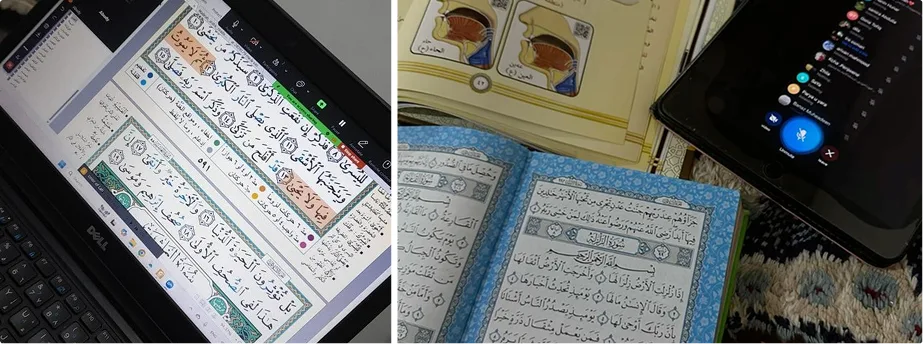
How to Choose the Right Quran Teacher (2025 Complete Guide)
Your Quran journey starts with one decision — finding the teacher who truly connects with your heart.
At Hoor Academy, that connection begins from your very first trial.


quran
How Online Quran Classes Work: A Complete 2025 Guide for New Muslims & Parents
Learn how online Quran classes work: live 1-to-1 sessions, real-time Tajweed correction, flexible plans, and progress reports. Start with free trial.
quran
Best Memorize Quran Website for Kids & Adults
Discover the best memorize Quran website with certified teachers, flexible schedules, and 2 free trial sessions. Start your journey today with Hoor Academy.
Arabic
How to Write “To” in Arabic for Beginners
Discover how to write “to” in Arabic step by step. Simple explanations, examples, and tips for beginners in the U.S. Start your journey today with our Learn to Read Arabic course at Hoor Academy.

quran
Benefits of Learning Quran Tafseer: Unlocking the Wisdom of the Quran
Discover the benefits of learning Quran Tafseer for faith, daily life, and deeper understanding. Start online with two free trial lessons.

quran
What Is Tafseer of Quran? A Complete Guide for Beginners
What Is Tafseer of Quran?
Discover its meaning, importance, and main types in simple words. Learn how tafseer explains the Qur’an beyond translation, explore famous tafseer works like Ibn Kathir and al-Tabari, and see why tafseer matters for Muslims in the US. Start your journey with practical steps and join an Online Quran Tafseer Course with free trial classes today.

quran
Common Mistakes in Quran Reading (and How to Fix Each One)
Common Mistakes in Quran Reading include wrong makharij, skipping ghunnah, and rushing. Learn how to fix them in online classes with live correction.
Understanding the Common Mistakes in Quran Reading is essential for effective learning.