
- Reading the Quran correctly is not just about sounds—it is an act of worship.
- Yet, many learners fall into the same mistakes: wrong pronunciation, skipping ghunnah, stretching Madd incorrectly, or rushing.
- This guide explores the most Common Mistakes in Quran Reading , explains why they matter, and shows you how to fix them.
- If you want faster progress, try our Online Quran Classes with personalized correction from expert teachers.
Why Correct Quran Recitation Matters:
- Correct recitation preserves the meaning of Allah’s words.
- A small mistake in pronunciation can change the entire meaning of an ayah.
- For example, reciting ‘alim (He knew) instead of ‘ullim (it was taught) gives a different message.
- Beyond meaning, accurate recitation helps maintain khushu‘ in salah and connects the heart to the Quran.
- Structured online Quran classes ensure that students learn with clarity and confidence.
Quick Fix Table: Top 10 Mistakes:
| Mistake | Quick Fix |
|---|---|
| Makharij/Sifat | Use a mirror + slow reading, focus on tongue/lips position |
| Ghunnah | Keep exactly 2 counts, neither shorter nor longer |
| Madd | Count 2–4–6 depending on type, don’t over-stretch |
| Qalqalah | Gentle “bounce” on sukoon, not an echo |
| Tafkhim/Tarqiq | Watch heavy letters (ص ض ط ظ خ غ ق) and Ra’ rules |
| Noon/Meem Sakinah | Apply Idgham/Ikhfaa correctly—practice with short verses |
| Shaddah/Sukoon | Stop fully on shaddah before moving on |
| Waqf/Ibtida’ | Do not stop mid-meaning—follow stop signs |
| Hamza/Tanween | Practice throat stop and nasal endings |
| Speed | Slow down—Tarteel reduces errors |
Top 10 Common Mistakes in Quran Reading:
Mistake #1: Mixing Qaaf and Kaaf
Qaaf (ق) is pronounced from the back of the tongue, while Kaaf (ك) comes from the middle.
Many beginners confuse them, especially when reading fast.
Example: Reciting قل هو الله أحد (Qul huwallahu ahad) with Kaaf instead of Qaaf changes it to Kul, which has no meaning in the verse.
Fix: Place the tongue near the soft palate for Qaaf. Record yourself and ask a teacher in online Quran recitation classes for correction.
Mistake #2: Skipping or Overstretching Ghunnah
Ghunnah (nasal sound) must be exactly 2 counts.
Shorter or longer changes the rhythm and tajweed.
Examples: من يقول (man yaqool), إن نشأ (in nashaa’).
Exercise: Pinch your nose while reading—if the sound cuts off, the ghunnah is correct.
Mistake #3: Wrong Madd (Prolongation)
Many learners stretch natural Madd too long or shorten mandatory Madd.
- Natural Madd: 2 counts
- Wajib Madd: 4–5 counts
- Lazim Madd: 6 counts
Fix: Practice قالوا three times with 2, 4, and 6 counts.
Mistake #4: Exaggerating Qalqalah
Qalqalah should be a light bounce, not an echo.
Letters: ق ط ب ج د.
Example: أحدْ, يقطعْ.
Mistake #5: Wrong Tafkhim/Tarqiq
Only seven letters are heavy (ص ض ط ظ ق غ خ).
The Ra’ changes depending on vowels.
Examples: Heavy: قرأ (qara’a), Light: فرقة (firqah).
Mistake #6: Errors in Noon & Meem Sakinah
Learners often confuse Ikhfaa and Idgham rules.
Examples: منكم (Ikhfaa), من يقول (Idgham).
Mistake #7: Ignoring Shaddah & Sukoon
Skipping shaddah changes the meaning.
Example: إياك must stop on the doubled “ya.”
Mistake #8: Wrong Waqf & Ibtida’
Stopping in the wrong place can distort meaning.
Example: Stopping at والموتى in Surah Al-An‘am gives false meaning.
Mistake #9: Mispronouncing Specific Letters
- Qaaf vs Kaaf: Back vs middle of tongue
- Taa vs Taa’ (ط): Light vs heavy
- Zha vs Dhaad: Tip vs side of tongue
Mistake #10: Rushing the Recitation
Rushing leads to doubled mistakes.
Fix: Slow down, focus on meaning, recite with tarteel.
Common Mistakes, Their Consequences, and How to Fix Them:
| Mistake | Consequence | Fix |
|---|---|---|
| Mixing Qaaf & Kaaf | Changes meaning of words | Practice tongue placement; get teacher feedback |
| Skipping Ghunnah | Breaks Tajweed flow | Hold nasal sound for exactly 2 counts |
| Wrong Madd | Disrupts rhythm and Tajweed | Count 2–4–6 depending on type |
| Exaggerated Qalqalah | Echo instead of a light bounce | Keep it gentle on sukoon letters |
| Ignoring Shaddah | Alters meaning of words | Pause on doubled letters before moving on |
The Role of Tajweed in Correction:

- Tajweed rules are the foundation of correct recitation.
- They define where each letter originates, how it should sound, and when to stretch or pause.
- Most mistakes—whether in ghunnah, madd, or qalqalah—stem from ignoring Tajweed.
- With tajweed correction online, learners apply these rules in real time with guided feedback.
Correction Techniques You Can Try at Home:
- Record yourself: Compare with a Qari daily.
- Listen to experts: Husary, Minshawi, and Mishary are recommended for clarity.
- Use a Mushaf with stop signs: Learn proper waqf to avoid meaning errors.
- One-on-One guidance: The fastest way is real-time correction in online Quran classes.
Learn with Guidance, Not Alone:
Self-practice helps, but nothing compares to learning with a qualified teacher. At Hoor Academy, our online Quran classes focus on correcting every mistake step by step. Whether you’re a beginner or advanced, you get personal attention in every session.
Success Stories from Online Quran Classes:
A child in the UK: Ahmed, age 10, used to confuse Qaaf and Kaaf.
After three months of weekly correction, he now recites Surah Al-Fatihah flawlessly.
His parents say he enjoys leading prayer at home.
A revert Muslim: Sarah from London started from scratch.
Through online Quran classes for beginners, she corrected her Tajweed errors and now recites short surahs with accuracy and khushu‘.
Your First Month in Online Quran Correction Classes:
Week 1: Teacher identifies your most Common Mistakes in Quran Reading (makharij, ghunnah, speed).
Week 2: Focus on correcting pronunciation and articulation with short surahs.
Week 3: Apply Tajweed rules like Madd and Qalqalah in live practice.
Week 4: Recite Surah Al-Fatihah and other short surahs with accuracy and confidence.
👉 By the end of the first month, most learners notice a clear improvement in fluency and confidence.
Research Evidence:
A UK study revealed the most Common Mistakes in Quran Reading: 29% articulation, 23% Tafkhim/Tarqiq, 23% Ghunnah, 14% Madd, 8% vowels/letters, 3% Waqf/Ibtida’. This shows why structured correction is essential for learners worldwide.
Tips for Kids & Non-Arabic Speakers:
- Start with short surahs like Al-Fatihah and Al-Ikhlas
- Use transliteration alongside audio recitations
- Correct one mistake daily for steady progress
7-Day Correction Plan:
- Day 1: Makharij basics
- Day 2: Ghunnah practice
- Day 3: Madd counting
- Day 4: Qalqalah focus
- Day 5: Tafkhim/Tarqiq exercises
- Day 6: Waqf/Ibtida’ practice on selected verses
- Day 7: Record and review with teacher
Need quick help? Message us directly on WhatsApp and get started today.
Online Quran Classes vs. In-Person Learning:
Flexibility: Learn from home at your preferred time vs. fixed schedules.
Feedback: 1:1 correction online vs. large group classes.
Cost: Affordable online sessions vs. commuting and higher tuition fees.
Access: Learn with Azhar-certified teachers worldwide vs. limited local options.
Frequently Asked Questions:
Why do I keep making mistakes in Quran recitation?
Most errors come from weak habits and rushing. Consistent practice with correction fixes them over time.
Can I correct myself without a teacher?
Self-correction helps, but a teacher is essential to catch mistakes you cannot hear yourself.
What’s the best way to learn Tajweed online?
Structured online Tajweed courses with one-on-one guidance are most effective.
How long does it take to fix recitation mistakes?
With daily practice and weekly correction, most learners see progress within 3–6 months.
Is it too late to start correcting as an adult?
No—many adults improve successfully. Dedication and guided lessons work at any age.
Why Learners Choose Hoor Academy
1:1 live correction sessions tailored to your mistakes
Azhar-certified teachers with years of experience
Flexible schedules for UK, US, and global students
First two classes are completely free—no risk, only learning
When it comes to Online Quran Classes, Hoor Academy is trusted by learners worldwide to make progress faster and with confidence.
Get Personalized Correction:
Want to fix your mistakes faster? Join our online quran classes course at Hoor Academy.
✅ Azhar-certified teachers
✅ 1:1 live online sessions
✅ Instant error correction
✅ First 2 classes are free!
Related blogs
Find out more

Islamic
7 Powerful Lessons from Al Isra wal Miraj
Discover the meaning of Al Isra wal Miraj, its miracles, spiritual lessons, and why this powerful night transformed hardship into divine hope for the Ummah until today.


quran
Learn Quran at Home in the US: Your Complete 2025 Guide
Learn Quran at home with certified teachers, flexible US schedules, and one-on-one online lessons designed for fast, accurate progress.

quran
Best Online Quran Classes for All Levels
Discover the best online Quran classes with certified teachers, structured learning, and flexible schedules. Join our top-rated Quran academy today.

quran
Learn Quran Step by Step: Complete Beginner’s Guide 2025
Prophet Muhammad (peace be upon him) himself learned the Quran gradually from Angel Jibreel over 23 years. This teaches us that patience and systematic learning are key to truly understanding and embodying the Quran’s message.

quran
Online Quran Study: Complete Guide to Learn Quran from Home in 2025
Whether you’re a parent guiding your child or an adult beginning your journey, online learning makes starting your Quran path simple and accessible.
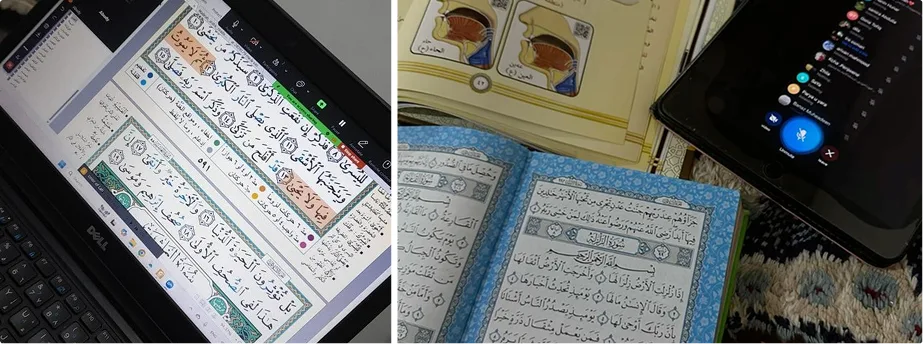


quran
How to Choose the Right Quran Teacher (2025 Complete Guide)
Your Quran journey starts with one decision — finding the teacher who truly connects with your heart.
At Hoor Academy, that connection begins from your very first trial.


quran
How Online Quran Classes Work: A Complete 2025 Guide for New Muslims & Parents
Learn how online Quran classes work: live 1-to-1 sessions, real-time Tajweed correction, flexible plans, and progress reports. Start with free trial.
quran
Best Memorize Quran Website for Kids & Adults
Discover the best memorize Quran website with certified teachers, flexible schedules, and 2 free trial sessions. Start your journey today with Hoor Academy.

Arabic
How to Write “To” in Arabic for Beginners
Discover how to write “to” in Arabic step by step. Simple explanations, examples, and tips for beginners in the U.S. Start your journey today with our Learn to Read Arabic course at Hoor Academy.

quran
Benefits of Learning Quran Tafseer: Unlocking the Wisdom of the Quran
Discover the benefits of learning Quran Tafseer for faith, daily life, and deeper understanding. Start online with two free trial lessons.

quran
What Is Tafseer of Quran? A Complete Guide for Beginners
What Is Tafseer of Quran?
Discover its meaning, importance, and main types in simple words. Learn how tafseer explains the Qur’an beyond translation, explore famous tafseer works like Ibn Kathir and al-Tabari, and see why tafseer matters for Muslims in the US. Start your journey with practical steps and join an Online Quran Tafseer Course with free trial classes today.
quran
Common Mistakes in Quran Reading (and How to Fix Each One)
Common Mistakes in Quran Reading include wrong makharij, skipping ghunnah, and rushing. Learn how to fix them in online classes with live correction.
Understanding the Common Mistakes in Quran Reading is essential for effective learning.